Sea Turtle: A Versatile Handwritten Font for Creative Branding
There’s a moment in every branding project where you open a blank brand board and feel the weight of the task ahead. That’s when I decided to test Sea Turtle on a boutique identity project. The client wanted something warm, approachable, and slightly whimsical—perfect for a small handmade shop that sells eco-friendly stationery and artisanal candles. I needed a font that felt personal yet professional, and Sea Turtle immediately caught my eye.
A Quirky Handwritten Font with Personality
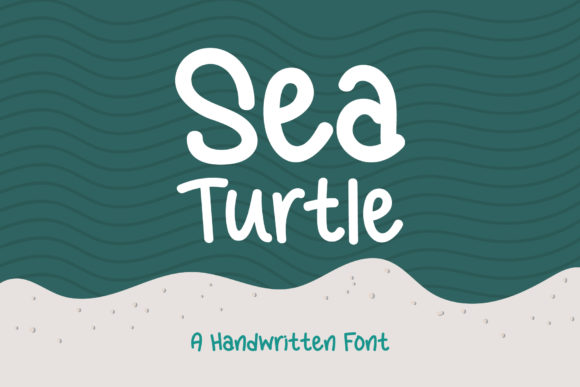
Sea Turtle is a cute and quirky handwritten font that feels like it was crafted with a mix of care and playfulness. Its character set is rich with subtle flourishes, swashes, and alternates that add visual interest without overwhelming the design. The strokes are soft and flowing, giving it a hand-drawn charm that’s both inviting and distinctive. It’s not your typical script font—it has a unique rhythm and personality that makes it stand out in a crowded market.
What really sets Sea Turtle apart is its versatility. While it’s clearly a handwritten font, it doesn’t feel too casual for more formal applications. It can transition from a playful logo to a refined social media header with just the right balance of style and structure. This adaptability makes it a strong contender for a wide range of design projects.
Testing Sea Turtle in Real Branding Work
I used Sea Turtle as the primary typeface for the boutique’s logo, which needed to reflect the brand’s eco-conscious values while maintaining a sense of warmth. Pairing it with a clean sans serif font for body text helped create a balanced hierarchy. The result was a logo that felt both modern and heartfelt, exactly what the client had in mind.
For the packaging mockup, I placed Sea Turtle on product labels and tags. It worked beautifully against minimalist designs, adding a touch of personality without clashing with the overall aesthetic. Even on smaller print sizes, the font remained legible, which is a big plus for product labeling and signage.
On the website, I used Sea Turtle in the hero section and social media graphics. It added a charming flair that aligned with the brand’s vibe. However, I noticed that at very small sizes or on low-resolution screens, some of the delicate strokes could become less clear. This is a common issue with handwritten fonts, so I recommend testing it in different contexts before finalizing its use.
Font Pairing and Design Applications
Sea Turtle pairs well with both serif and sans serif fonts, depending on the desired tone. For a more elegant look, I paired it with a classic serif font like Georgia or Baskerville. For a modern twist, I matched it with a sleek sans serif like Montserrat or Lato. The contrast between the organic flow of Sea Turtle and the structured clarity of these fonts creates a visually appealing balance.
In editorial design, Sea Turtle can be used as a headline or accent font to draw attention to key messages. On posters and flyers, it adds a creative edge that can elevate the overall design. For web design, it works best as a display font rather than body text, especially when used in short phrases or callouts.
One thing to keep in mind is that Sea Turtle isn’t ideal for long body text or highly formal corporate use. Its playful nature may not align with the seriousness of a financial institution or legal firm. However, for creative studios, local restaurants, bakeries, and handmade shops, it’s an excellent choice that can enhance brand identity and audience engagement.
Practical Tips for Using Sea Turtle
If you’re considering using Sea Turtle for client work, make sure to review the included styles, weights, ligatures, and alternates. These features can help you customize the font to fit different design needs. Also, check the file formats and webfont availability to ensure compatibility across platforms and devices.
Before applying Sea Turtle to final client work, always test it in various contexts—on business cards, packaging, social media posts, and printed materials. This will help you understand how it performs under different conditions and ensure it meets your design goals.
Finally, don’t forget to verify the commercial font licensing. If you’re using Sea Turtle for brand identity, packaging, templates, or digital products, make sure you have the appropriate rights to do so. Licensing is crucial for protecting both you and your client.
Overall, Sea Turtle is a fantastic addition to any designer’s toolkit. It brings a unique personality to your work while remaining versatile enough to adapt to a variety of design scenarios. Whether you’re working on a boutique identity, café refresh, or creative studio branding, Sea Turtle can help you create spectacular designs that resonate with your audience.